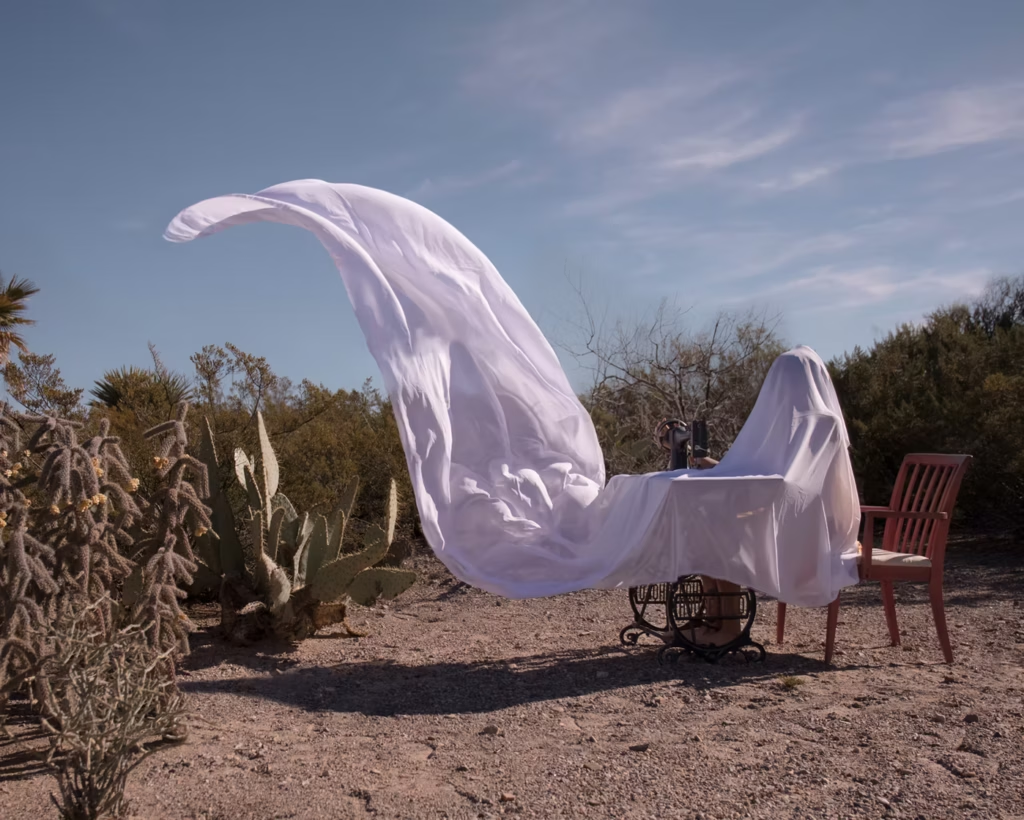
The airy fabric ‘Muslin’ has whispered through the ages like a secret shared in the hush of ancient looms, its softness a gentle rebellion against the world’s rough edges. Born in the misty dawn of Bengal’s riverbanks, where dew-kissed fibers spun into cloth finer than spider silk, it draped emperors and dreamers alike, evoking the ethereal grace of monsoon clouds. Yet in these fevered years of flux, muslin stirs anew, not as relic but as revelation. It bends to the hand of innovation, weaving the timeless with the urgent, the delicate with the defiant. This fabric, once the envy of courts from Delhi to Versailles, now adapts to our restless era: breathable shields in sterile halls, silent allies in creative chaos, quiet guardians of the earth. Here unfold seven wonders of its resurgence, narrated in the fabric’s own airy cadence, each thread laced with the ghosts of its storied past.
1. The Return of a Legend
Picture the shadowed workshops of 17th-century Dhaka, where Mughal artisans coaxed phuti karpas cotton into muslin so sheer it vanished against the skin, earning the moniker “woven air” from awestruck Persian poets. European envoys, docking in sweltering ports, smuggled bolts that could slip through a ring, fueling a frenzy that stripped Bengal’s forests bare. By the 19th century, colonial mills had silenced the looms, consigning the craft to elegies in dusty archives.
Yet legends, like rivers, carve paths back to the sea. In 2014, Bangladesh’s Muslin Revival Project ignited a quiet uprising, scouring seed banks for the lost phuti karpas and training rural women in dawn-harvesting rites passed down through oral lore. By 2025, national workshops in Dhaka hummed once more, empowering over 500 artisans, mostly women from forgotten villages, to weave saris weighing mere grams, their motifs blooming like lotuses from the loom. One such revival sari, unfurled at a Tangail exhibition, took six months to birth, its fabric shimmering like the Padma River at first light. This is no mere echo; it is resurrection. The spirit infuses every modern muslin bolt, from the cloud-soft blankets of YaDa Cotton to the peshtemal towels that grace your shelves, carrying Bengal’s defiant whisper into your quiet corners.
2. A New Favorite on Couture Runways
In the gilded salons of 18th-century Paris, muslin descended like manna from the East, swathing Marie Antoinette in chemises that fluttered like captive clouds, scandalizing Versailles with their scandalous sheerness. This “Indian lawn,” as courtiers dubbed it, birthed the Empire silhouette, its gauzy layers a canvas for ribbons and lace that danced in the candlelight of revolutionary balls.
Fast-forward to the stark elegance of 2024’s Paris Couture Week, where Thom Browne peeled back the veil on muslin’s alchemy. His Fall collection draped the runway in six weights of the humble weave, once the couturier’s secret toile, now the star, fraying strips into tweed-like tapestries, stacking pleats into sculptural clouds that moved like glacial water over frozen forms. Models glided through Les Arts Décoratifs, swathed in cream expanses that evoked unfinished masterpieces, gold bullion threading the edges like forgotten constellations. Designers from Schiaparelli to Valentino echoed the call, layering muslin into gowns that breathed with the wearer, tops folding into vaporous blooms. This quiet opulence mirrors the hush you feel slipping into a YaDa Cotton bathrobe, its folds a runway of one, or snapping a peshtemal towel to air-dry in the sun’s forgiving gaze.
3. A Gentle Touch in Hospitals

From the blood-soaked battlefields of the Crimean War, where Florence Nightingale’s nurses bound wounds in muslin strips imported from Bengal for its plain weave a bulwark against infection, to the neurosurgical suites of today, this fabric has been healing’s unsung sentinel. In 1890s operating theaters, surgeons prized its absorbency, coining “gauze” from the Arabic gaz, a nod to its Levantine roots, as it staunched flows without adhering to fragile flesh.
Now, in 2025’s sterile sanctums, muslin endures as the gold standard for surgical gauze, its open grid allowing oxygen to whisper through while wicking away peril. Neurosurgeons wrap aneurysms in its folds during cerebrovascular odysseys, the cloth a calm anchor amid the brain’s tempests, while dermatologists favor it for dressings that cradle sensitive skins without irritation. Innovations like non-adherent coatings amplify its grace, turning potential scars into seamless recoveries. That same serenity greets you post-bath, as a muslin poncho or robe settles like a healer’s hand, warm and unassuming, evoking the quiet vigil that has mended bodies for centuries.
4. The Artist’s Canvas
Envision the gaslit stages of Victorian London, where muslin backdrops, painted with distemper in cavernous ateliers, conjured moonlit glades for Gilbert and Sullivan’s whimsy, their soft diffusion bathing actors in a halo of dream. Photographers like Julia Margaret Cameron draped sitters in its folds for ethereal portraits, the fabric’s matte embrace swallowing glare to reveal the soul’s subtle light.
In today’s ateliers, muslin remains the artist’s confidante. Theater troupes at the Globe or Broadway commission seamless drops from Georgia Stage, their natural weave primed for pigments that bloom without bleed, crafting illusory forests or starlit voids. Photographers layer it for moody editorials, its organic drape adding depth to shadowed narratives; painters stretch it taut for canvases that drink oils like parched earth. Set designers in Hollywood’s soundstages favor its honesty, no synthetic sheen to betray the illusion. Thus, muslin towels and robes in your home become subtle scenics, blending into sunlit rooms with an enhancing calm, never stealing the scene but elevating every glance.
5. A Sustainability Hero
Muslin’s green soul traces to the zero-waste looms of ancient Bengal, where every scrap fed the pyre or the loom anew, its unadorned cotton a testament to nature’s thrift. In an age of synthetic deluge, it rises as antidote: biodegradable, craving no chemical baths, returning to soil like autumn leaves.
Organic variants, sown in rain-fed fields sans pesticides, slash water use by 30 percent and cradle biodiversity, their gauzy bags supplanting plastic in markets from Mumbai to Manhattan. Reusables abound: drawstring pouches for produce that last seasons, cheesecloth for straining curds in farmstead kitchens, filters for steeping herbs without waste. In 2025, brands like Little Blue Nest champion muslin squares as multitaskers, burp cloths by day, produce wraps by dusk, halving household plastics in one soft sweep. YaDa Cotton echoes this ethos, crafting pieces that comfort without conquest, their lightness a pledge to the planet’s patient pulse.
6. Modern Science Meets Ancient Softness

Alchemy once tinged muslin with saffron dyes in Mughal dye-vats, where natural tannins warded moths from imperial wardrobes. Now, labs summon fiercer guardians: 2024’s mussel-inspired coatings, drawn from marine adhesives, sheath fabrics in antimicrobial armor that thwarts pathogens without toxins, slashing infection risks in high-touch linens.
By 2025, plant-extract infusions, neem and thyme bound via green chemistry, infuse weaves with enduring freshness, while PFAS-free repellents like Microban’s WR1003 render muslin water-shedding yet vapor-permeable, ideal for storm-ready swaddles. Nanocomposite trials yield inhibition zones against skin foes, birthing ponchos that defy spills and robes that dry in defiant puffs. Tradition and tomorrow entwine, proving muslin’s weave vast enough for both.
7. A Quiet Companion in Daily Life
From the spice markets of medieval Baghdad, where muslin sacks sifted saffron without bruising its gold, to the hearths of today, this fabric has been ritual’s faithful shadow. Newborns once nestled in its folds amid Renaissance cradles; now, it shields modern infants as swaddles that soothe colic’s storm.
In 2025’s hurried homes, muslin multitasks with grace: coffee filters sewn from scraps brew bold without bitterness, blankets cocoon toddlers in breathable dreams, towels unfurl on beaches to sip sea spray. It strains citrus for elixirs, buffs silver with a lover’s touch, even veils skincare masks in spa-like hush. YaDa Cotton honors this by centering collections on its candor: immediate solace in every stitch, luxury as innate as breath.
A Soft Revolution
Muslin shuns the thunder of ostentation, captivating instead through the subtle thaw it works on the spirit. A brush of its weave, and tensions uncoil like morning mist from a valley; its drape invites the body to unfurl, unburdened; its presence in your sanctuary tempers edges into invitation.
As the globe hungers for earth’s honest threads, muslin leads with the poise of a river carving stone: unhurried, inevitable. Every YaDa Cotton peshtemal towel, adult or child’s bathrobe, wee poncho bears its vow.
A vow of pristine ease.
A vow of tender graze.
A vow of abiding yield.
Muslin reshapes the world in murmurs. The profoundest sort.
The kind that settles in the bones before the mind takes note.